productivity tips · Dec 18, 2023
Can a Career Setback Lead to a Big Opportunity? Here's 5 Ways How

Last updated: July 20, 2026
Career setbacks are inflection points, not endings, and five reframings turn them into bigger opportunities than the original path would have offered. Embrace the learning curve, develop a strategic growth plan, explore unfamiliar career possibilities, build resilience as a default skill, and treat the gap as time to reskill rather than wait for the next move.
- How does a setback actually become an opportunity?
- How do you embrace the learning curve without just venting?
- How do you develop a career growth plan that survives Monday?
- Should you explore new career possibilities or double down?
- How do you network and find mentorship without sending the LinkedIn post?
- How do you turn setbacks into strengths on your resume?
- What are the common mistakes when turning a setback into an opportunity?
- When is a setback NOT actually an opportunity?
- Key takeaways
- Frequently Asked Questions
Setbacks are almost guaranteed in any career that lasts more than a few years. A project tanks. A promotion goes to someone else. Your whole team gets restructured between two Tuesdays. The bad news is that it stings every time. The good news is that the people who come out ahead aren't the ones who avoid setbacks. They're the ones who turn each one into the next move.
This post walks through five reframings that consistently work, plus the common mistakes that quietly waste the recovery window. You'll also see when a setback genuinely isn't an opportunity, because pretending otherwise is its own kind of damage.
Read more on How to Break Free from Work Addiction.
How does a setback actually become an opportunity?
The "setbacks make you stronger" line gets thrown around like it's settled science. It mostly is.
The American Psychological Association's research on post-traumatic growth, building on work by Tedeschi and Calhoun, found that a meaningful share of people who go through a major disruption report durable positive change in at least one of five areas afterward: new priorities, deeper relationships, personal strength, new possibilities, and a clearer sense of meaning.
Career setbacks are smaller than the events that research originally studied, but the mechanism rhymes.
The catch is that the growth doesn't happen on its own. It happens to the people who do something deliberate with the gap. Sitting on the couch waiting for clarity is not a strategy. The five reframings below are the deliberate part.
Which kind of setback are you actually dealing with?
Not every setback opens up the same kind of opportunity. Treating a layoff like a missed promotion, or a failed launch like a bad manager fit, is how people waste their recovery window. Here's a rough map.
| Setback type | What it usually exposes | The opportunity it tends to open up |
|---|---|---|
| Missed promotion | A visibility gap, not a skill gap | A frank conversation about scope, or a move to a company that already sees you that way |
| Layoff or role cut | Market shift, not personal failure | A reset on industry, comp band, or remote setup that you wouldn't have negotiated otherwise |
| Failed project | Execution or scoping weakness | A signature post-mortem that becomes your best interview story for the next five years |
| Bad manager fit | Mismatch in working style | A clearer list of what you actually need from a manager, which makes the next interview loop much sharper |
| Industry decline | Long-term skill obsolescence | A forced pivot you'd been postponing, with the rare advantage of urgency |
Read the row that matches your situation before you draft any plan. The opportunity you're aiming at should be in the right-hand column, not a generic "grow as a person."
How do you embrace the learning curve without just venting?
Setbacks come with a silver lining only if you do the unsexy work of writing down what happened. A private one-page post-mortem beats six conversations with friends, because friends are kind and post-mortems are honest. Cover what happened, what you controlled, what you didn't, and what you'd do differently with the same information.
The point isn't to assign blame to yourself. It's to separate the story you'll tell in interviews from the story you tell at 2 a.m. You need both, but they shouldn't be the same document. If you want the fuller sequence this post-mortem fits into, how to handle a career setback walks through all six recovery steps in order.
Read more on 5 Ways to Build Resilience for Any Career Challenges.
How do you develop a career growth plan that survives Monday?
A setback is a decent wake-up call to reassess where you actually want to be in five or ten years. Most growth plans fail not because the goals are wrong but because they live in a Notion doc no one opens after week two. Pick one concrete skill or credential that closes the gap the setback exposed, and block weekly time for it like it's a paid project.
A plan that fits on one page beats a plan that fits in a binder. Identify the skills and experiences your target role needs, set milestones every 30 days, and revisit the doc on the first of every month. If you can't remember what's in it without opening it, it's too long.

Should you explore new career possibilities or double down?
A setback is sometimes the nudge you needed to look at roles or industries you'd quietly written off. Research adjacent fields where your existing skills already apply, and talk to two or three people doing the work before you commit to anything. The cost of an exploratory coffee is zero. The cost of a wrong pivot is a year.
That said, exploration is not the same as fleeing. If you loved your old role and the setback was situational, the right answer might be the same job at a better company. Be honest with yourself about which one this is.
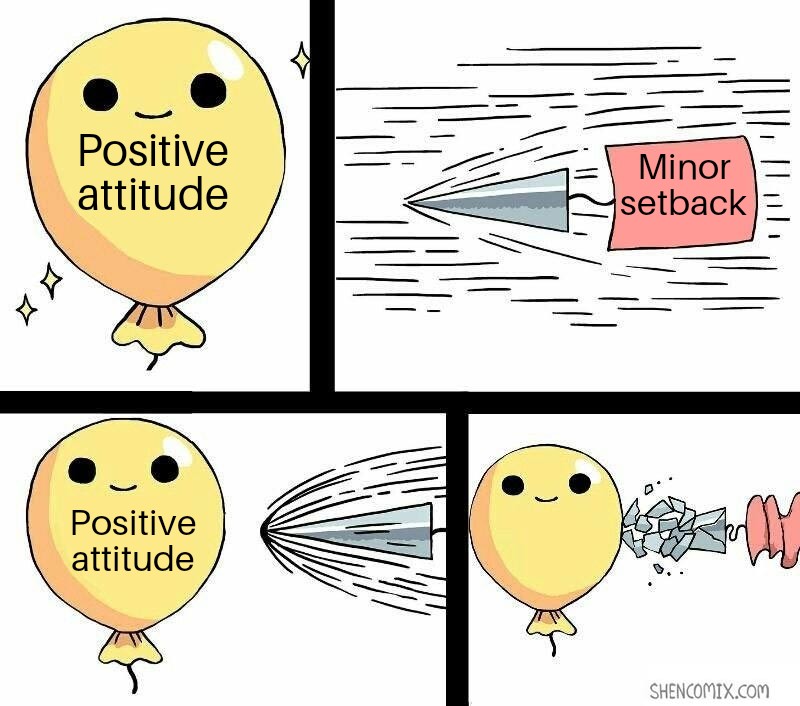
Source: Shencomix.com
How do you network and find mentorship without sending the LinkedIn post?
The instinct after a setback is to broadcast. Resist it. A targeted message to ten people who already know your work, each with one specific question, outperforms a public update every time. People answer specific questions. They scroll past vague asks for help.
Mentorship works the same way. The useful question is not "can you mentor me?" It's "I'm thinking about X, you've done X, can I ask you two questions about how you decided?" Most senior people will say yes to that and no to the first one, for reasons that become obvious once you've been on the receiving end of both.
How do you turn setbacks into strengths on your resume?
Stop hiding the setback and start owning the lesson. A bullet that says "led project that missed launch date, ran post-mortem, shipped revised version 6 weeks later with 30% better retention" tells employers everything they need to know about how you handle pressure. A bullet that quietly omits the failed launch makes them wonder what else you're omitting.
Use your resume and your interview answers as a platform to show how you turned setbacks into opportunities for growth. Resilience and adaptability are skills employers actively screen for. You can't demonstrate them without naming the moment that required them.
What are the common mistakes when turning a setback into an opportunity?
Most of the damage during a recovery window is self-inflicted, and the patterns are surprisingly consistent. Here are the five that show up most often.
Mistake 1: Acting inside the first 72 hours. The version of you that just got laid off is not the version that should be making five-year decisions. Sit with it. Vent to one person. Then move.
Mistake 2: Broadcasting before you've decided anything. The "open to opportunities" LinkedIn post sent in week one usually attracts the wrong attention and locks you into a story before you've thought it through. Decide what you want first, then go public.
Mistake 3: Confusing motion with progress. Updating your resume nine times, refreshing job boards every 20 minutes, and applying to 80 roles you don't actually want is a way to feel busy without making a real decision. Two thoughtful applications beat 80 spray-and-pray ones.
Mistake 4: Outsourcing the diagnosis. Asking ten friends what you should do next is comforting, but the answers will contradict each other and you'll feel worse. The post-mortem is yours to write. Other people give you data points, not the conclusion.
Mistake 5: Skipping the skill investment. The recovery window is one of the rare times you have both motivation and time on your side. Not using it to close one specific gap is the single biggest waste. Pick one skill, give it 90 days, and you'll have a story to tell that didn't exist before.
When is a setback NOT actually an opportunity?
Here's the part the motivational posters skip. Sometimes a setback is just a setback. Pretending otherwise is its own kind of harm.
If your industry is collapsing in a way that no amount of upskilling fixes, the opportunity isn't to "grow from the experience." It's to leave. Coal miners in 1985 didn't need a growth mindset. They needed a different industry. The same is true for a few corners of media, retail, and a growing list of roles where AI is eating the entry-level work. The honest move is to pivot, not to journal about it.
If the setback was a serious health event or a family crisis, the framing of "opportunity" can feel insulting, because it is. Recover first. The career stuff will still be there in three months, and you'll make better decisions about it once you've slept.
If the setback came from a workplace that was genuinely toxic, the lesson isn't "what could I have done differently." It's "I will not work somewhere like that again," and the opportunity is calibrating your next interview loop to filter for it. That's a real opportunity. Self-blame dressed up as growth isn't.
And if you've had three setbacks in a row in the same direction, that's not a setback anymore. That's a signal. Listen to it before forcing a fourth attempt at the same goal.

Key takeaways
Career setbacks are uncomfortable, but they're also the rare window where you have both motivation and time to make a real change. Adopt a clear-eyed mindset, write the post-mortem, pick one skill, and treat the recovery as a 90-day project with a checkpoint date.
Explore new possibilities when the old path is genuinely closed, double down when the old path was right but the situation was wrong, and be honest about which one you're in.
The most successful careers usually trace back not to the absence of setbacks but to a few specific recoveries that compounded. So can a career setback lead to a big opportunity? Yes, if you treat it like a project with a deliverable, not a feeling to wait out.
If you want a place to actually run that 90-day plan with checklists, deadlines, and a partner who's also going through it, give Quire a try free. Setbacks compound when they live in your head. They resolve when they live on a board.
More career reads: Top 5 AI Tools to Prepare for Job Interviews and 7 Essential Tips for Maintaining Mental Health During Career Transitions.
Frequently Asked Questions
What is a career setback?
A career setback is any disruption to your progress, like a failed project, a missed promotion, or an industry shift. It feels like a roadblock, but it's really an inflection point you can reframe into growth.
How can I turn a career setback into an opportunity?
Analyze what went wrong, then use the gap to build a growth plan, explore new possibilities, and reskill instead of waiting passively for the next move.
How do I write a career growth plan after a setback?
Reassess where you want to be in five or ten years, identify the skills the role requires, and set achievable milestones to get there.
Should I mention career setbacks on my resume?
Yes. Framed well, a setback reads as a strength, not a blemish. Employers value the resilience and lessons gained over a flawless track record.
How does mentorship help during a career setback?
A mentor who's faced similar challenges gives you perspective and access to opportunities you can't see on your own, which helps turn the setback into a stepping stone instead of a dead end.