workstyle · Dec 22, 2015
Out of mind, cope with time

Last updated: July 22, 2026
A reckless one-day trip to Hong Kong turned into a lesson about coping with limited time. For a small remote team spread across timezones, the right tools are what make it work: one for the work itself, one to track and manage it, and one to communicate. Get those three right and time stops feeling like the enemy.
It was on a Wednesday morning that I told myself, “This is it. You’ll travel to Hong Kong this Saturday to shop at Apple Store, J. Crew and Lane Crawford in the IFC Mall and be back in one day.”
So, I booked the round tickets online on Wednesday, self checked on Friday, and left home with a shoulder bag (I remember it was a Longchamp leather bag) at exactly 7am on Saturday. My friends said I’m crazy, and my sister said, “You should’ve told me so we can go to Disneyland together!”
I wouldn’t call it a spur of the moment, an act of impulse, or even a crime of passion. Traveling alone and be back in one day was just something that’s been on my bucket list for at least two years and that I’ve never found the right time to do.
Unfortunately, not everything on my bucket list can be scratched off this spontaneously and easily.
Take developing a comic reader app for iPhone and iPad for example. It sounds simple and straightforward but for a writer who has little knowledge about designing and coding and who is only comfortable with spelling words such as Honorificabilitudinitatibus, it’s more like a daydream than a dream. And yes, I’ve checked out the how to write iOS apps guide on LifeHacker but there’s only so little I could grasp from it.
Simply put, I can’t do it alone. Not in a million years.
In my notebooks, I already jotted down ideas of what I imagine this app to look like, to do, and what kind of people it’ll serve, so I need at least a designer, a programmer and a marketing specialist to help me turn them into reality. In as little time as possible.
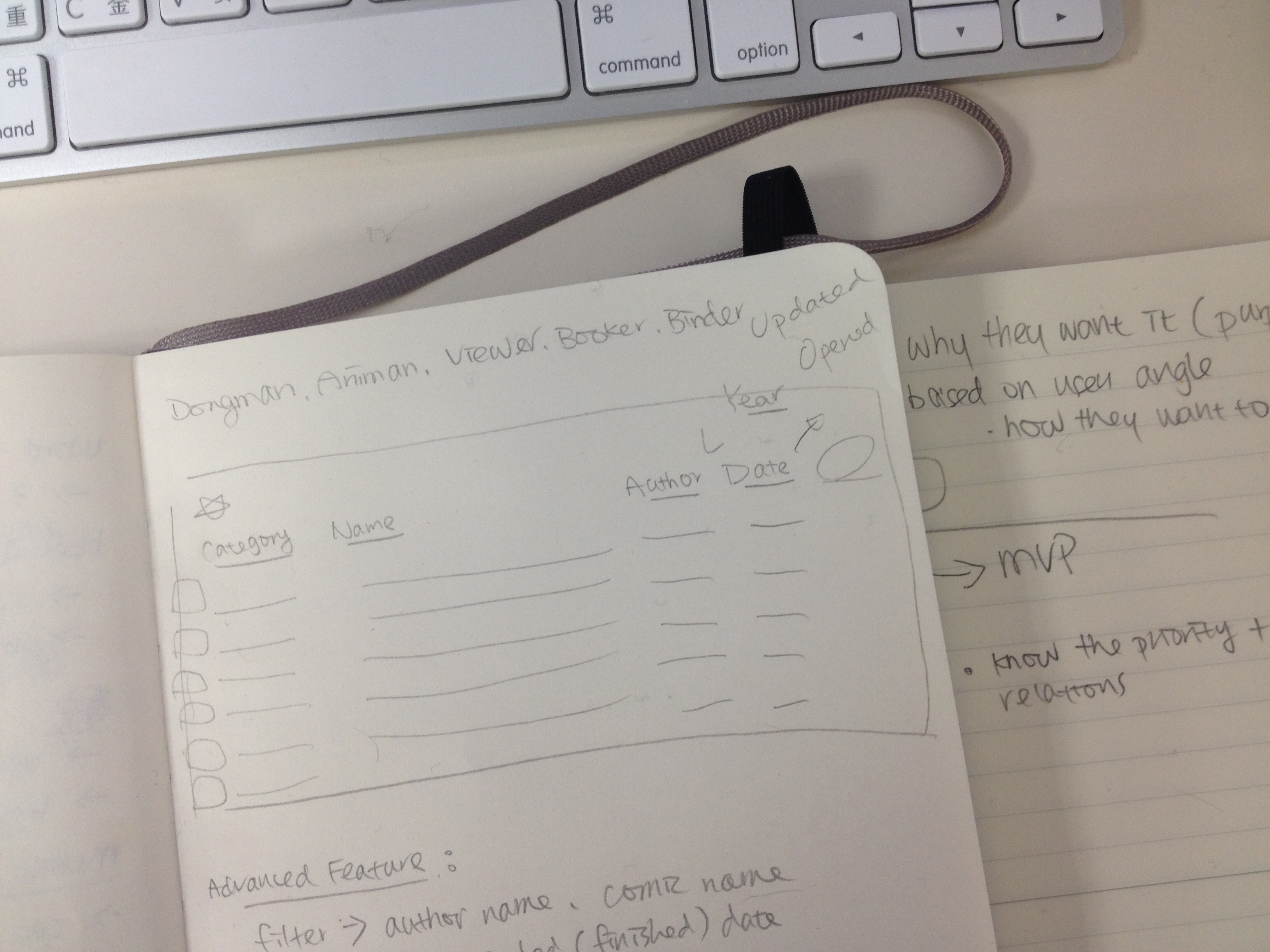
This is where collaboration kicks in. As a small team of 4 people, other than my Moleskine and Midori notes that came straight from my brain, we still need to find the right tools to help us ease the pains of communication and collaboration, as well as being somewhat remote from one another. (For more on making remote work actually work, see How to Win as a Remote Team: Advice from Quire.)
Here are some tools that I (actually we) find helpful:
Time really is the scarce resource here. Gloria Mark's team at UC Irvine found it takes about 23 minutes to refocus after an interruption, so for a scattered team the tools that cut interruptions are the ones that buy back the day.
What do you need for the work itself?
As a writer who needs a place to capture the sometimes out-of-nowhere ideas and come up with the masterpieces, I can’t imagine living without Evernote and Google Doc. You can never anticipate when a new idea might hit and when it does if you’d just be able to finish wrapping up a long-been-delayed blog post.
The same goes for the designer with her graphics editors Photoshop and Illustrator and the programmer with his Xcode and IntelliJ IDEA.
How do you track and manage the work?
If one or more of your team members are working in a different timezone than yours, a good task tracking and management tool is especially important. What we’re using right now is Quire, which has integrated with Google Drive and GitHub, thus making a huge difference for me and our programmer Kevin as we rely heavily on them.
That's the core challenge of asynchronous collaboration across timezones: work has to keep moving even when nobody's online at the same time.
How does a remote team stay in sync?
Also, be it a 4-people meeting or a 1-1 conversation, we need a communication and video tool to discuss the macros and the micros of our iOS app. Skype is a quick and easy way to have team discussion, and Google Hangouts is an excellent choice for 1-1 chats, which happens a lot between our designer Amber and our marketing specialist Cher.
A good communication tool is particularly important because we don’t want to waste the time that each of us has squeezed from our busy schedule wondering what is right and how it should be done on our own.
It's one of the most common team communication pitfalls for distributed teams: too many tools and not enough clarity on which one to reach for.
For Caffeine
Well, this one isn’t exactly a tool and it’s not mandatory. For someone who can only appreciate the smell of coffee, I drink tea - black tea and green tea with my favorite being the fruity and flowery Marco Polo from Mariage Frères.
I make it in my 12oz DavidsTea Timolino, with a 2.5g of loose tea for 3 minutes and 45 seconds at 96 degree Celsius (no I’m not picky, it’s normal for making decent tea) at around 8am and 3pm everyday to keep me awake.
You may already know that working with others is never easy. And it’s something that every individual has to do at least at some points in their life. But with just the right setup and tools, everyone on the team can easily contribute to a productive team, and a big dream! I’d love to hear your experience collaborating with your team members. What’s going well and what isn’t?
What does a small remote team's toolkit look like?
Stripped of the travel story, the setup comes down to three needs.
| What you need it for | The kind of tool |
|---|---|
| The work itself | A task manager that holds the plan and the doing in one place |
| Tracking and management | A shared view of who owns what and what is due, across timezones |
| Communication | A dedicated channel so updates don't get lost in scattered chats |
More productivity reads: Your time comes with a price tag and 3 Reasons to Be and Stay Lazy.
Frequently Asked Questions
Why do remote teams need the right tools to collaborate?
The right tools ease the pains of communicating across timezones and locations, so people stop wasting time guessing how to move forward alone.
What kinds of tools does a small remote team rely on?
Capture and writing tools for ideas, a task tracking tool for coordination, and a communication tool for meetings and one-on-one chats.
Why does a task tracking tool matter most across timezones?
It keeps work coordinated when teammates aren't online at the same time. The author uses Quire, which integrates with Google Drive and GitHub.
Why is a dedicated communication tool important for a team?
It lets the team discuss both the big picture and the details without wasting anyone's squeezed-out time, keeping everyone aligned.