productivity tips · May 5, 2020
The Art of Being Productive While Staying In

(Photo by Thought Catalog on Unsplash)
Last updated: July 22, 2026
Lockdown does not have to mean lost productivity or lost sanity. Drawing from a fully remote team's experience, this post offers five practical habits for staying productive while staying in: start a book club tracked with a checklist, declutter digital to-do lists and folders, learn a new language using a Kanban board, knock out long-postponed tasks, and take real breaks through meditation or journaling.
Plenty of us spend long stretches at home, whether we work remotely, take a break between jobs, recover from an illness, or simply choose to stay in for a season. The common worry is the same: that staying inside kills productivity and slowly dulls the mind. It does not have to.
Long days indoors can feel shapeless. Without the structure of a commute or an office, the hours blur together and it is easy to end a week with nothing to show for it. But a home routine is something you can design on purpose, and a few deliberate habits turn empty time into progress.
The real question is what to do with all that time. We have worked as a fully remote team almost from the first day, so we have learned the art of staying in while keeping our minds sharp and getting things done. Here are five habits that hold up whether you are stuck inside for a week or building a long-term work-from-home rhythm.
Read more on how to work from home and still stay productive.
1. How do you start a book club with a checklist?

We usually make endless excuses to avoid reading: too busy, too tired, not in the mood. But now, you are staying inside and reading should be prioritized.
Make a to-do list and write down the books that you are currently reading or you want to read in the future. For each book, write one or two key takeaways.
You should commit to read for at least 20-30 pages a day and keep a reading journal to track your reading progress. You will be amazed by how many books you have read when the quarantine period is over.
Here are some of the books that we recommend you to read during this challenging time:
Factfulness: Ten Reasons We're Wrong About the World – and Why Things Are Better Than You Think by Hans Rosling, Ola Rosling and Anna Rosling Rönnlund: When we are all facing a pandemic crisis, it is really difficult to just “stay hopeful to see the curve will flatten one day”. This book is devoted to presenting readers with ten instincts (that are all proven with data collection and practical analysis) that keep us from seeing the world factfully. Hans argues that these instincts make it difficult to put events in perspective. Don’t trust the biased media, don’t divide the world into “us” and “them”, look for the facts and mindfully examine the data. The world is getting better, and so are we.
Start with Why: How Great Leaders Inspire Everyone to Take Action by Simon Sinek: Everybody knows what they do, some know how they do it, very few people know why they do what they do. The WHY theory gives us the purposes and beliefs behind every action, the ability to make better decisions as entrepreneurs as well as individuals. If you want to sell a product, start with the reason why your potential customers would want to buy your product. The book provides great insights from business, military and social movements where leaders identify their Why and how they breathe the WHY into their organizations.
The Things You Can See Only When You Slow Down by Haemin Sunim: “The world moves fast, but that doesn’t mean we have to” - quoted from this heart-warming book. In the pandemic period, the best thing we can do is to calm ourselves down and take this opportunity to rest our minds and embrace the surroundings. Don’t dwell on the negativity, instead focus on treating yourself with more compassion and always choose happiness.

2. How do you declutter digital to-do lists?
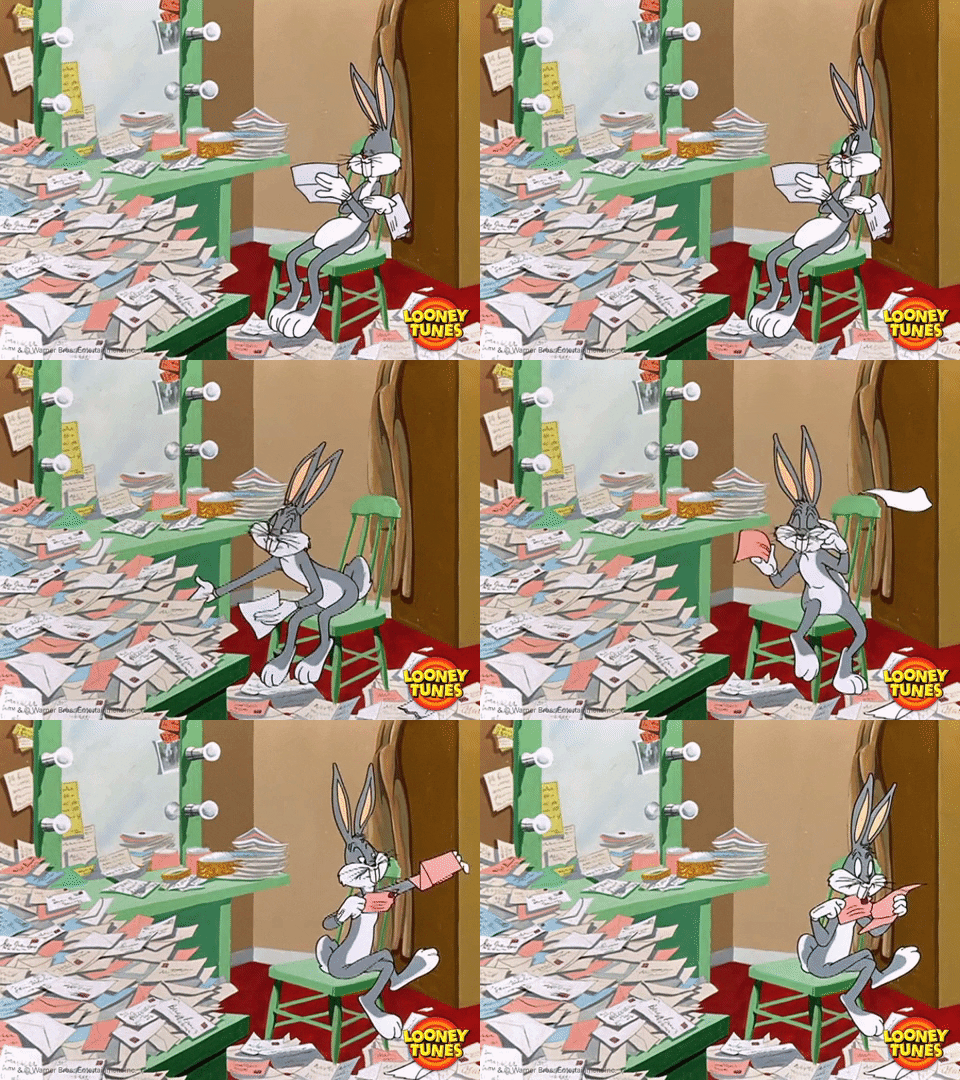
This is the best time to practice mindfulness and minimal living. Start with your to do lists and hundreds of folders in your computer. If you are working with a digital to-do list app, export your documents to create backup files. If you are having troubles finding your file in your local drive, start auditing your computer.
Stop making excuses to start practicing digital minimalist lifestyle. A digital declutter starts with removing all optional apps and overdue tasks from your phone and your to-do list.
You can go through every existing file to make sure you need them for future reference or you are just projecting your FOMO (Fear of Missing Out). You can also go through the mailbox and start unsubscribing from any mailing lists that you are looped in.
Organizing your mailbox can easily help you pass a couple of hours by without feeling too overwhelmed.
3. Why learn a new language?

You don’t have to be fluent in French by the time the lockdown is lifted but at least now you have time to learn something else besides Je t’aime or Bonjour! There’s no better way to pass the time, be productive and keep your mind sharp than learning a new language.
You can use a Kanban board to track your learning progress. Add new vocabulary in the to-do column and move them forward to the complete column as you remember them. You can even invite your friends to start a learning challenge with you by comparing notes and see how many words you can remember within one week.
Learn more about Kanban Swimlanes and how they can boost your productivity.
4. How do you knock out lingering to-dos?
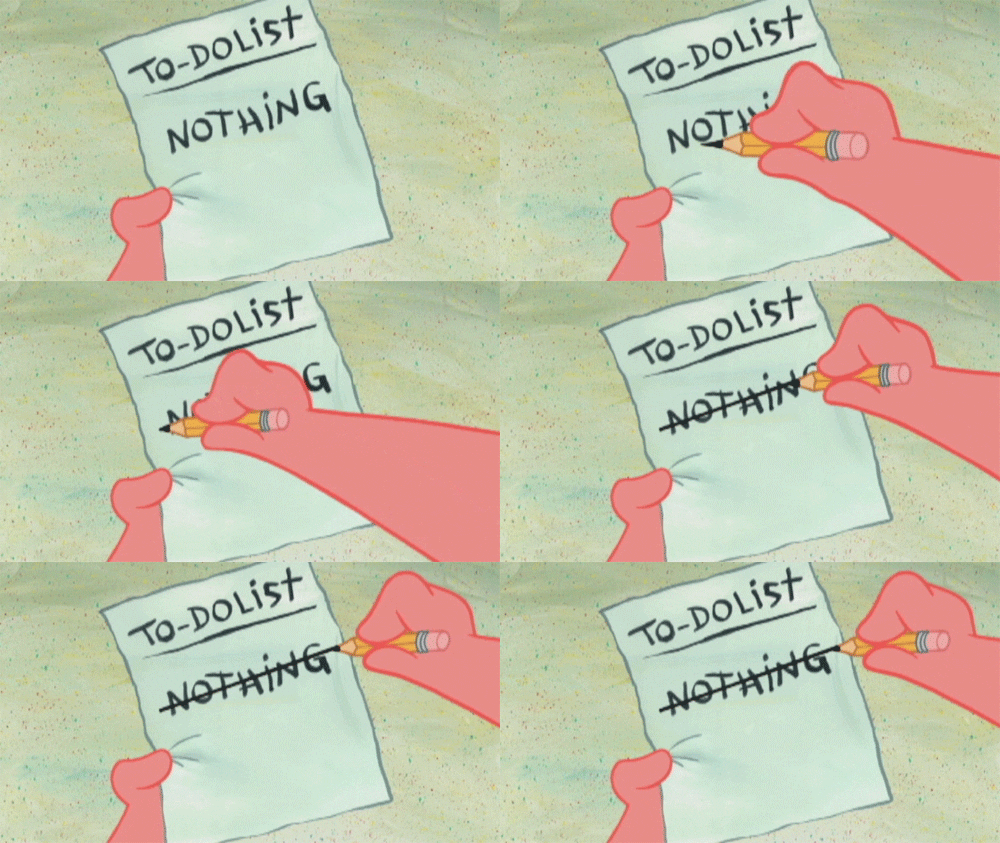
Island hopping on Animal Crossing sounds fun, but how about taking a small break from the virtual world? You want to feel active and alive even when you’re locked at home? Get on the to-do list you’ve been putting off forever. If you are a project manager, take this time as a precious opportunity to evaluate new ideas and maybe you can come up with a breakthrough when the lockdown finishes. Maybe you have some complicated projects that you have been procrastinating on since forever, now may be the good time to start tackling the first tasks in the to-do list.
People may feel stressed from doing nothing and making no value (it’s a real cause of depression, Google it!). Now you have time to do something, don’t waste it on HBO or Netflix. Even though you may not be doing anything productive to cure the coronavirus in particular, completing your to-do list can still give you the satisfaction feeling.
5. Why take a break from it all?

You might be fed up with all of the cliches telling you to meditate and relax. However, you still need to learn to stop your mind from freaking out from all of the negative thoughts. Stop checking the data and numbers about coronavirus every hour. This is a highly contagious virus, the number will keep going up, the curve has not been flattened yet, and when the lockdown is over, you will get notified. There is nothing you can do about this situation.
Indulging yourself with meditation, journaling, or even starting your own podcast channel. The post COVID-19 world will change forever. Take this time period to prepare yourself with the change. We are all in this together, but not everyone can come out of this pandemic with a better version of themselves.
That’s all for today! We hope you already have some ideas to stay productive and sane during this pandemic period. What’s your story? Let us know in the comment section below or tweet us at @quire_io 😍
Related: Productive Downtime: The Method That Beats Burnout — a closer look at why real breaks like the ones above matter for avoiding burnout.
What can you actually get done during a slow stretch?
A slow stretch is a chance to clear the backlog and learn something. Five ways to use it well.
| Idea | What it looks like in practice |
|---|---|
| Start a book club with a checklist | Turn reading into a shared, trackable goal |
| Declutter your digital to-do lists | Archive the dead tasks so the live ones breathe |
| Learn a new language | Small daily lessons that compound while things are quiet |
| Knock out lingering to-dos | Finally close the small tasks you kept pushing |
| Take a real break | Step away fully, so you come back with something in the tank |
Frequently Asked Questions
How can I stay productive at home during a lockdown?
Build a few repeatable habits: track a reading list, declutter your digital to-do list and files, learn a language with a Kanban board, clear lingering tasks, and take real breaks.
How do I build a reading habit during quarantine?
List every book you want to read in a checklist app, read 20 to 30 pages a day, and jot one or two takeaways per book in a reading journal.
What is digital decluttering and where should I start?
It's removing optional apps, overdue tasks, stale files, and dead email subscriptions to cut mental load. Start with a backup export, then audit your drive folder by folder.
How do I use a Kanban board to learn a new language?
Use two columns, To Learn and Learned, and add each new word as a card. Move cards forward as you remember them, and compare boards with a friend weekly.
How do I take a real break while staying inside all day?
Step away from screens for meditation, journaling, or a podcast instead of refreshing news feeds, and pair it with some light movement around the house.
Which of these personal productivity habits still work outside lockdown?
All five are evergreen. Tracking a reading list, decluttering digital files, learning on a Kanban board, clearing lingering tasks, and taking real breaks work for any remote worker or anyone building a long-term work-from-home routine.