project management · Mar 12, 2024
8 Benefits of Using Project Management Tools for Career Transition

Last updated: October 30, 2026
A career transition, switching industries, changing roles, or pursuing significant advancement, is essentially a project, and project management tools bring structure and visibility to what otherwise feels chaotic. Eight benefits compound: structured goal setting, task breakdowns of big ambitions, Gantt-charted timelines that sequence networking and learning correctly, real-time progress dashboards, adaptability when opportunities shift, accountability through visible milestones, evidence of commitment for mentors and employers, and momentum when motivation dips.
The decision to change careers takes a weekend. The change itself takes a year, and most of that year is unglamorous. A course finished at night. A coffee with someone who knows someone. An application sent, and another, and the one that comes back.
That's a project.
It has a goal, a deadline you'd rather not say out loud, dependencies, and a budget of evenings. The tools built for running projects run it better than a notes app and good intentions, and this post covers eight ways they do.
The skills carry in both directions, too. PMI's Talent Gap report projects that the world will need 25 million new project professionals by 2030, so planning your own transition like a project is also practice for the job market you're entering.
What is a career transition?
A deliberate move from one professional path to another. Shifting within the same industry, moving to a new field, or climbing inside your current profession all count.
Each one needs a roadmap, and the roadmap works best when it separates the long-term career goal from the smaller milestones that get you there. "Become a data analyst" is the destination. "Finish the SQL course by March" is a milestone. Most people write down the first and never the second.
Why use project management tools for a career shift?
Because project management tools were built for exactly this shape of problem. A big outcome, many small tasks, an order they have to happen in, and a long stretch of time in which motivation will come and go.
Here's how the tool features map to the career payoff.
| PM tool feature | What it does for your transition |
|---|---|
| Task lists and milestones | Break big career goals into manageable, trackable steps |
| Shared workspaces | Keep mentors, peers, and potential employers on the same page |
| Deadlines and time blocks | Protect time for networking, skill development, and job applications |
| Gantt charts | Sequence tasks and milestones so progress stays logical |
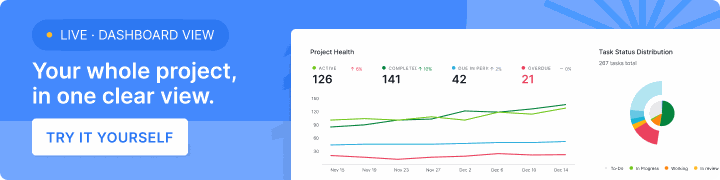
| Progress dashboards | Boost morale and give employers tangible evidence of commitment |
| Real-time editing and progress data | Pivot when opportunities shift and refine the plan with data on completion rates |
What are the 8 benefits of project management tools for a career transition?
Eight, and they build on each other.
The first four give the transition a shape. The last four keep it moving.
1. How do PM tools support structured goal setting?
By forcing the goal into parts. A project tool won't accept "move into product management" as a task, so you end up writing the pieces. Learn the vocabulary. Ship one small internal project. Talk to five product managers. Apply to three roles by June.
That's the same measurable structure behind a good OKR framework, and it does the same job. Once the goal has parts, you can see which part is next and which part is stuck.
2. How do PM tools enable collaboration during a career change?
A transition is rarely solo. A mentor reviews your plan. A friend in the target industry reads your resume. A former manager agrees to make an introduction, then forgets.
A shared workspace puts those people on the same page as you. Your mentor sees the plan instead of hearing about it over coffee once a quarter, and the introduction you were promised has a task with a name and a date on it (which is a polite way to remind someone).
3. How does dynamic task management build momentum?
A career change runs several tracks at once. Learning, networking, applications, and the current job that's still paying for all of it. The challenge is holding those tracks in order without one swallowing the others.
A tool with to-do lists, priorities, and deadlines keeps the next action visible on every track. When a recruiter replies on Tuesday and the course has a deadline on Friday, you can see both and decide, instead of discovering the course deadline on Saturday.
Read more on best 12 task management software for creative teams.
4. Why is time management crucial during a career change?
Because the time comes out of a life that's already full. Nobody hands you a sabbatical. The hours for a transition are the hours after dinner and the one lunch break a week you manage to protect.
A project tool with scheduling turns those scraps into a plan. Tuesday and Thursday evenings for the course. One coffee a week, booked a month out. Applications on Sunday morning, before the week's inbox arrives. A schedule you can see is a schedule you can defend.
5. How do Gantt charts help you visualize career goals?
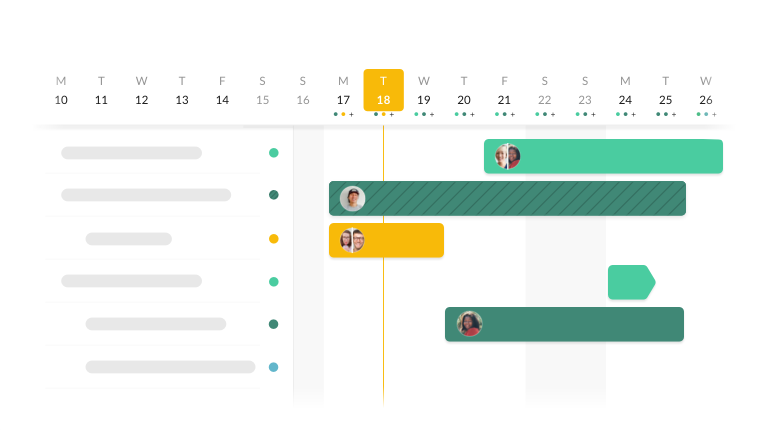
By showing the order. Gantt charts lay the transition out on a timeline, with each task as a bar and the dependencies drawn between them.
Why does order matter so much in a career change? The certification has to finish before the applications that require it. The networking has to start months before the applications, because introductions take weeks to land. A timeline makes those dependencies visible before they bite, which is cheaper than discovering them in a rejection email.
6. How do you track progress on career goals?
With a dashboard that shows what's done. Months two and three are where transitions die, because the early excitement is gone and the offer is nowhere in sight. A dashboard of completed tasks, finished modules, and conversations had is the proof of movement you need on the week nothing seems to move.
It's also proof for other people. "I've been working toward this for six months" lands differently when you can show the six months.
7. How do PM tools enable real-time adaptability?
By making the plan cheap to change. Opportunities don't arrive on schedule. A role opens two months earlier than you planned. A conversation reveals that the certification you were studying for matters less than a portfolio.
In a project tool, you move the tasks, re-date the milestones, and the rest of the plan adjusts around them. Nothing already done is lost, and nothing has to be re-planned from a blank page. The goal holds while the route bends.
8. How does data-driven decision-making drive success?
Through the record the tool keeps without asking. Completion rates, how long each stage took, which track keeps slipping. That's the same kind of data analytics in project management teams use to catch a timeline early, pointed at your own year.
Read it monthly. If applications are going out but interviews aren't coming back, the problem is the resume or the targeting, not the volume. If the course keeps slipping, the Tuesday slot is wrong. The data tells you which part of the plan to fix, so you don't fix all of it out of frustration.
What does this look like for one person?
Take an accountant moving into data analytics. The goal sits as a parent task with a date eleven months out.
Underneath it, four sublists. Skills (a SQL course, a Python course, one portfolio project using real public data). Network (fifteen conversations, two a month). Applications (a target list of twenty companies, applications starting in month seven). Current job (the handover plan, so the exit is clean).
The timeline shows that the portfolio project has to finish before applications start, so the Python course gets pulled forward. Month four, a conversation reveals that hiring managers care more about the portfolio than the certificate, so the second course is cut and its evenings go to the project.
Month nine, two interviews. Month ten, an offer.
The plan changed four times along the way, and none of the changes cost a restart.
How do you set this up in Quire?
In Quire, the career goal is a parent task and each step nests underneath with its own date, which is what turns an intention into a sequence you can start. Sublists hold the tracks, the Timeline view draws the dependencies, and the Overview shows what's done at a glance.
Mentors join the project as members and see the same board. The weekly review is a recurring task, so the check-in happens on the weeks you'd rather skip it.
Where do career-change plans go wrong?
Three places.
Too many tracks at once. Four courses, three certifications, and a networking goal of fifty people produce a plan that collapses in month two. Pick one skill track and one networking track, and add the rest when the first two have a rhythm.
No milestone before the offer. If the only finish line is "get the job," the first nine months feel like failure. Put a milestone every six to eight weeks, each one something you can finish without anyone else's permission.
Keeping the plan private. A transition nobody knows about has no accountability and no introductions. Share the board with one person who'll ask how it's going.
Career transitions rarely follow a straight line. A project tool doesn't straighten the line. It keeps you on it when the line bends, and it keeps a record you can show to the people who decide whether you've arrived.
More career reads: 12 Career Lessons from Notable Leaders and Can a Career Setback Lead to a Big Opportunity? Here's 5 Ways How.
Frequently Asked Questions
What is a career transition?
A career transition is a planned move from one professional path to another, such as changing industries, roles, or advancing within your field. It requires strategic planning and a clear roadmap.
Why use project management tools for a career change?
They add structure and visibility to your job search by turning career goals into trackable tasks, timelines, and milestones. That keeps momentum steady even when the path gets uncertain.
How do project management tools support structured goal setting?
They break big career goals into small tasks with deadlines and progress indicators. This makes each objective feel concrete and achievable rather than overwhelming. By making the goal something with parts rather than a sentence. A parent task in Quire holds the goal and each step nests underneath with its own date, turning an intention into a sequence you can start.
How do Gantt charts help during a career transition?
Gantt charts visualize the sequence and dependencies of your transition tasks across time. They help you order networking, learning, and applications logically so nothing slips.
How do you track progress during a career shift?
Use dashboards and task logs inside your tool to record completed tasks and milestones. The running record builds motivation and also serves as proof of effort for employers or mentors.