features · Feb 19, 2019
Import Your Data From Other Project Management Software
Last updated: September 30, 2026
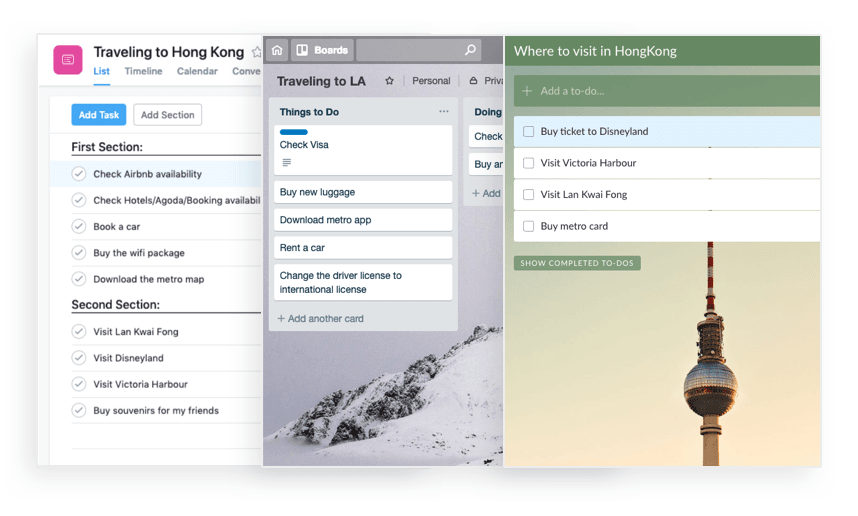
Quire imports JSON exports from Asana, Trello, Wunderlist, ClickUp, Notion, Monday, Jira, and most other tools that produce structured task data. The flow is four steps: create a project, open the dropdown, pick the file, done. Nested structure is preserved, Trello boards land in Quire's Board view, Asana subtasks stay subtasks. For tools without JSON export, the copy-paste path still works.
- Which project management tools can you import into Quire?
- How do you restore your Quire backup data?
- Why do teams migrate to Quire from other project management software?
- How do you import your data into Quire?
- What changes when you import from Asana, Trello, or Wunderlist?
- What are the most common mistakes when migrating to a new PM tool?
- Frequently Asked Questions
- Ready to import your data into Quire?
Switching project management tools is usually two days of work nobody scheduled. The data is in one shape over there, you need it in a different shape over here, and the export-import dance loses half the structure on the way through. (You know the dance. Everyone knows the dance.)
Quire's import feature exists so you stop having to do the dance. It takes JSON exports from Asana, Trello, Wunderlist, and most other tools that produce structured task data, and it keeps the parent-child hierarchy that most migration paths flatten.
Which project management tools can you import into Quire?
Here's what transfers cleanly from the tools most teams move from, and what you'll need to rebuild on the Quire side. The pattern: structural data (tasks, subtasks, descriptions, assignees, dates, comments, labels) crosses over. Tool-specific automation does not, because every tool implemented automation slightly differently. That's the bargain, basically.
| Source tool | Native export path | What transfers cleanly | What you may need to rebuild |
|---|---|---|---|
| Asana | Asana JSON export, then Quire import | Tasks, subtasks (including those nested in Asana descriptions), assignees, due dates, comments | Custom fields beyond the core task model, automation rules |
| Trello | Trello JSON export, then Quire import | Cards become Board tasks, lists become columns, comments and labels preserved | Power-Up data, Butler automations |
| ClickUp | Export to JSON, then Quire import | Tasks, subtasks, hierarchy, basic fields | ClickApps, automations, custom views |
| Notion | Export pages with task databases to JSON | Database rows become tasks, properties become fields | Page content beyond databases, embedded blocks |
| Monday | CSV or JSON export, then Quire import | Items and subitems become tasks and subtasks | Board automations, native integrations |
| Wunderlist | JSON export, then Quire import | Lists become root tasks, items become subtasks | Recurring task patterns may need re-setup |
| Jira | JSON export via Jira REST API, then Quire import | Issues become tasks, subtasks preserved | Workflows, custom screens, automation rules |
| Linear | API export to JSON, then Quire import | Issues, sub-issues, projects | Cycles (map to sprints or sublists in Quire) |
| Local backup (JSON) | Direct re-import | Full project state at backup time | None (it is a full restore) |
Plan for a few hours of rebuilding automation on the Quire side after the data lands. Not a few days. A few hours.
How do you restore your Quire backup data?
In addition to our periodic backup, you can backup your data to your local devices by yourself. Earlier we have introduced to you how to migrate to Quire using Copy and Paste, now we have added another easier way to import and restore your local backup data with a JSON file.
With the feature of importing and exporting data, you can now export your data to your local device to have a copy, and restore at anytime to Quire system then start working on where you left off with your project. The process of importing your data is simple, straightforward and easy, just like everything else that you love about Quire!
Why do teams migrate to Quire from other project management software?
We often receive requests from our users about how to migrate their data from other project management software to Quire. Changing tools is rarely easy, which is why the import feature is designed to take a few steps rather than a few days. You export your data from your current project management software to a JSON file, then import it into Quire in one operation.
We believe you have your own reasons to migrate to Quire from other project management softwares. In case you are new to Quire, here is a quick summary why people switch to Quire:
A simple and clean user interface is the thing that Quire users appreciate the most. It’s always our top priority to develop Quire. Besides, an intuitive user experience that requires little to no training process is one thing that makes Quire special.
Nested task list is our unique feature that you can break down big ideas into smaller, doable tasks. You can organize them in a hierarchical task list which maps your mind.
Kanban board is an option for you to get focus when your task list is long. You can select a few, crucial tasks which you need to pay attention in a short period of time and move them to a Kanban board and manage them in visual workflows. More important, you can switch back to the nested task list view anytime to get the big picture.
How do you import your data into Quire?
Okay, here are a few simple steps that you can follow to import the JSON file.
- Create a new project on Quire
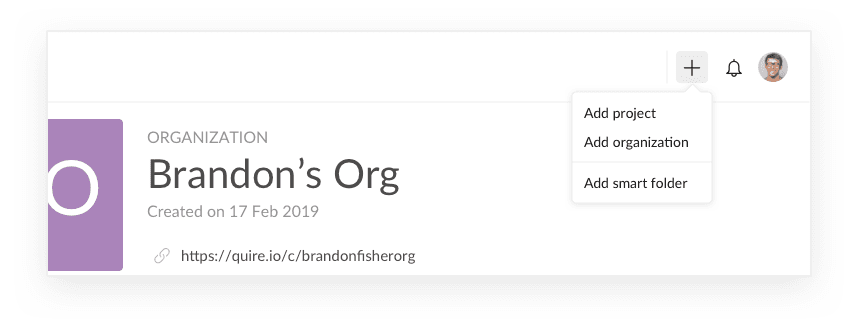
- Click on the dropdown menu next to your new project’s name
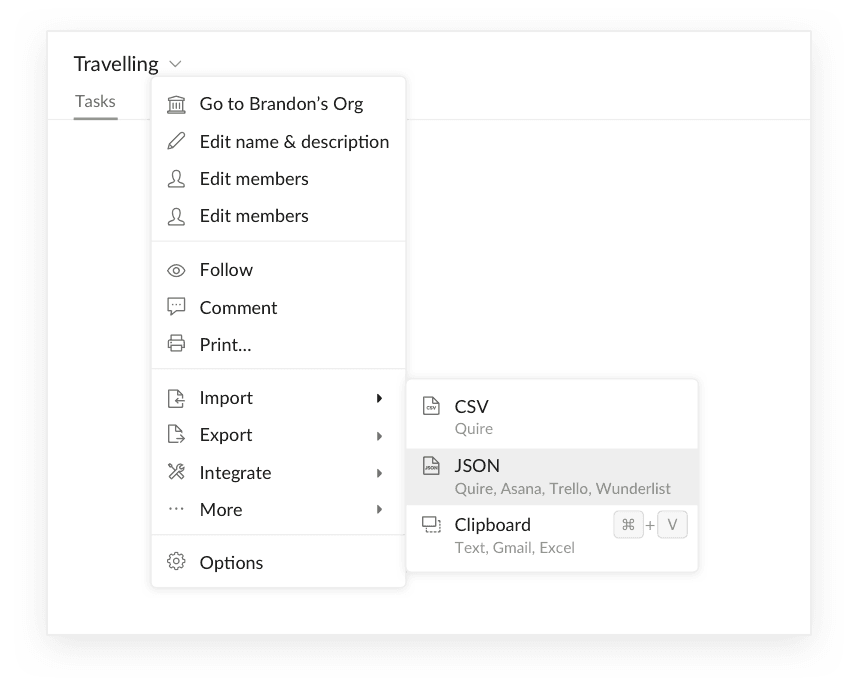
- Select and import your local JSON file
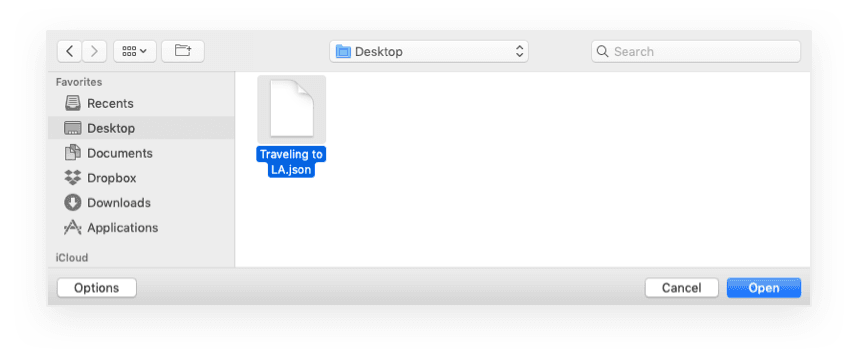
- Your data has imported into Quire. You can start working on the project immediately.
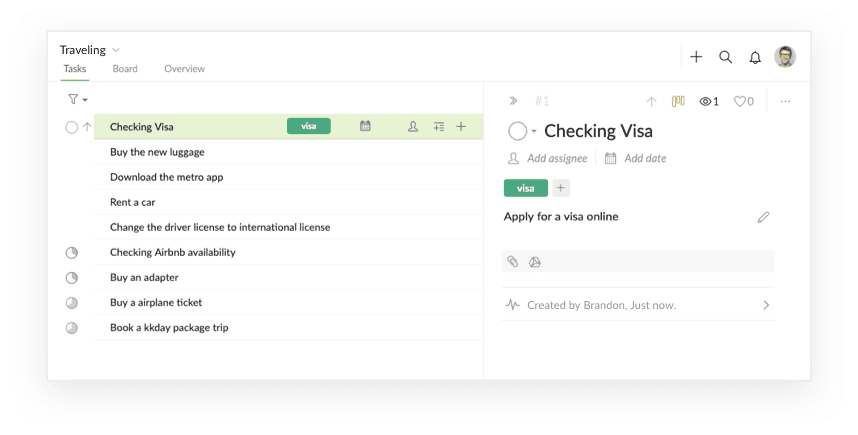
The whole flow takes under five minutes per project. If you have ten projects to migrate, plan an afternoon rather than a day.
What changes when you import from Asana, Trello, or Wunderlist?
If you’re importing data from Asana…
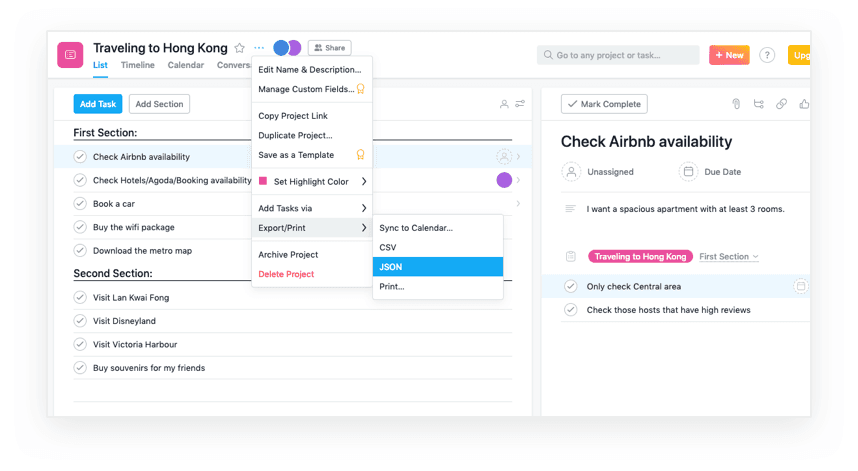
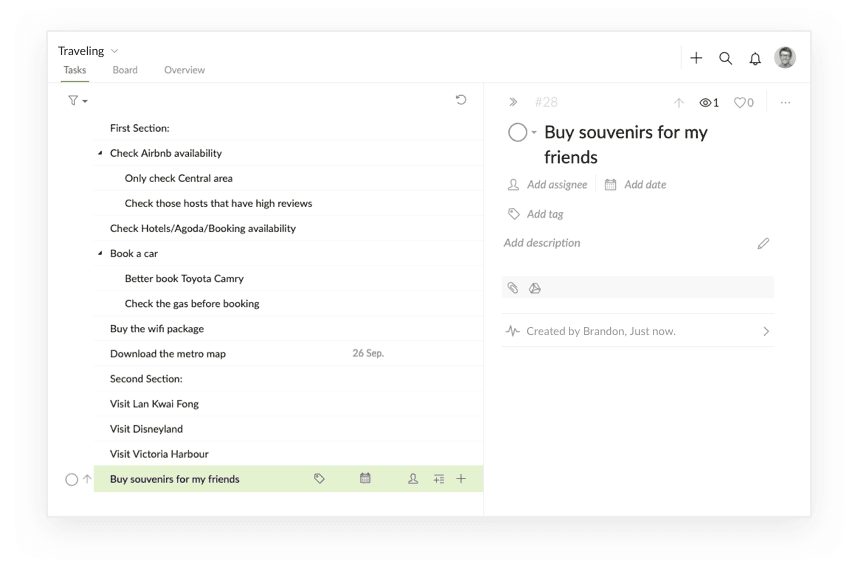
After you finish importing your data, the data will be transferred automatically into the tree structure task list view as a default setting. All of the subtasks in the description section on Asana will be treated as subtasks in the task list on Quire. If you wish to use Kanban Board view, you can add your tasks from your task list view to the board.
If you’re importing data from Trello…
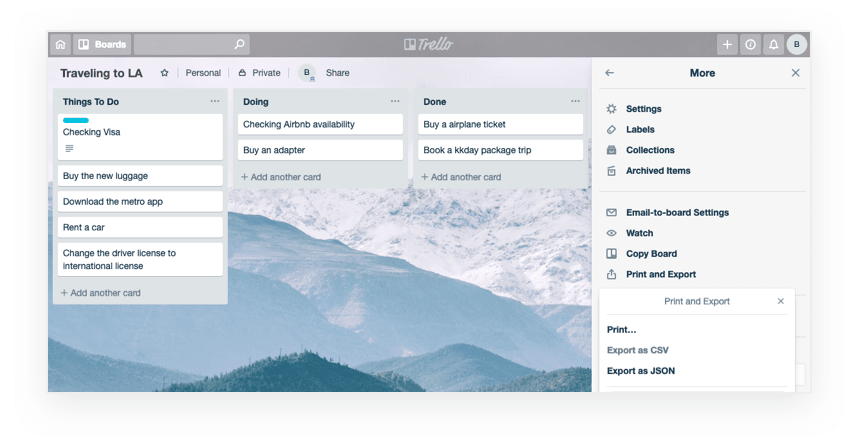
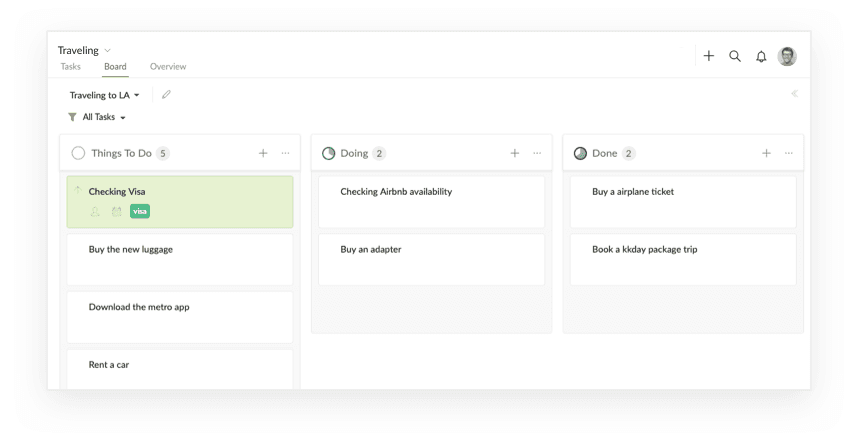
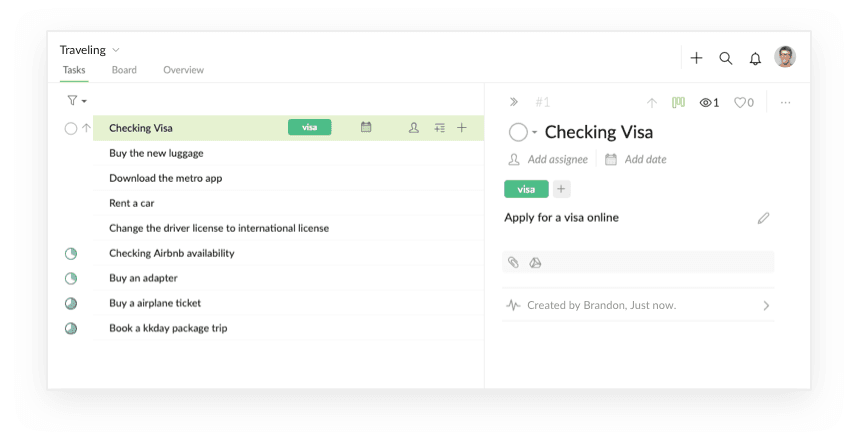
All of your board and cards from Trello will be automatically transferred to Kanban Board in Quire. The tags, descriptions and comments will also be transferred into the appropriate sections. Also, if you want to work with your project in a nested task list view mode, you can switch to tasks. All of your tasks have been successfully transferred there.
If you’re importing data from Wunderlist…
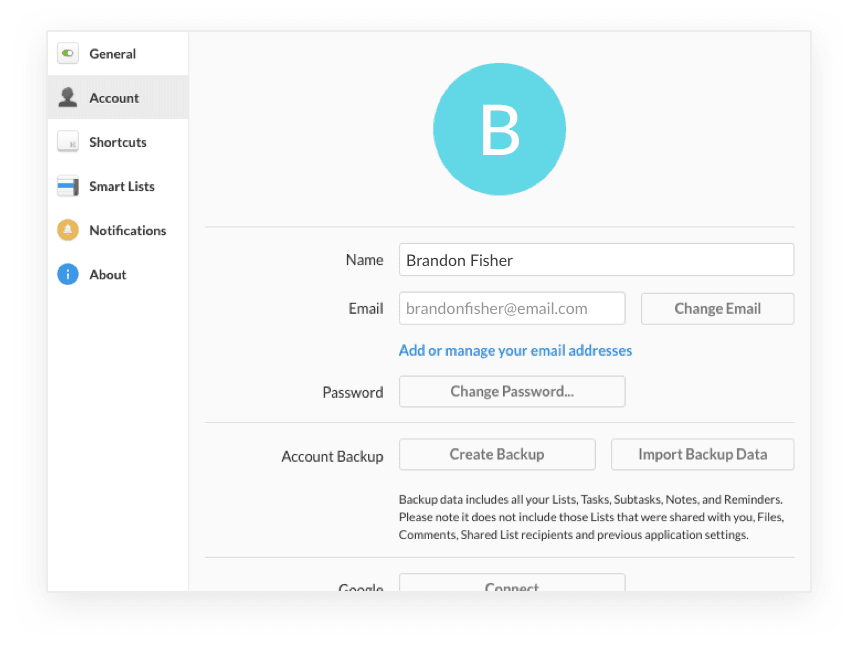
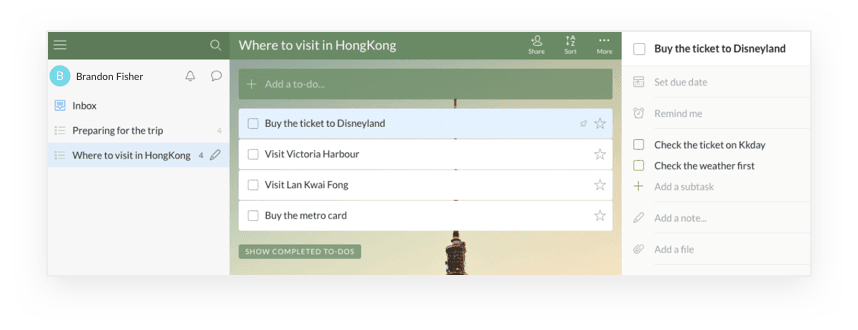
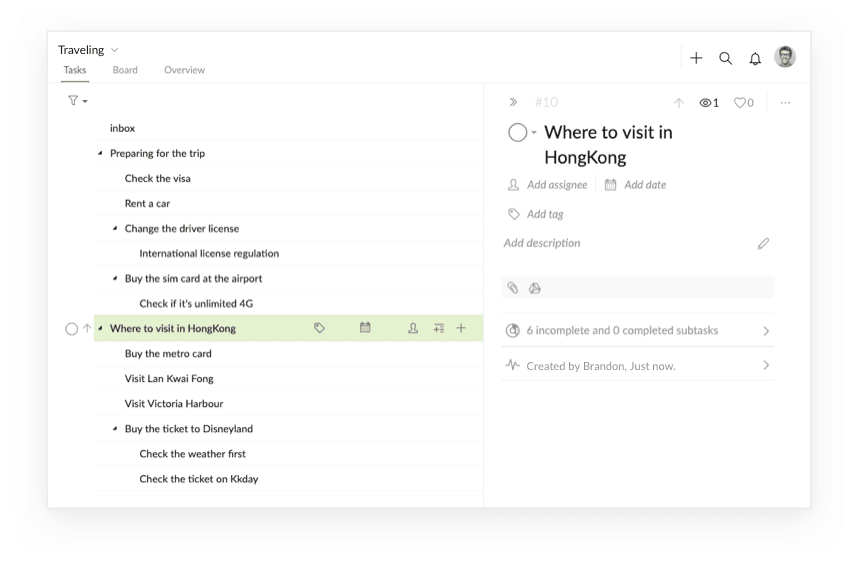
All of the lists from the left sidebar in Wunderlist will be treated as root tasks in Quire, and the tasks inside the lists will be treated as subtasks. If there’s a subtask in Wunderlist, it will become the sub-subtask in Quire. If you wish to treat each list from Wunderlist as a project in Quire, you can move these tasks to other projects.
Migration guides for other tools:
- Switch from Producteev
- Switch from Wrike
- Switch from ClickUp
- Switch from Notion
- Switch from Teamwork
- Switch from Todoist
What are the most common mistakes when migrating to a new PM tool?
We've watched teams move to Quire from Asana, Trello, Wunderlist, ClickUp, and Notion. Four patterns show up almost every time. None of them are subtle, and all of them are avoidable.
1. Migrating everything on Day 1. The cutover migration is the migration mistake. The team is fighting the new tool, the data is in flux, and any one small issue affects every project at the same time. Fix: migrate one in-flight project first, live in it for two weeks, then migrate the rest once the patterns are settled.
2. Skipping the cleanup pass before export. Every PM tool accumulates dead tasks, archived projects, and assignees who left the company two years ago. If you import all of that into Quire, you've just moved the noise. Spend an afternoon archiving the dead data in the source tool before exporting. The signal-to-noise ratio of the imported data is what tells the team whether to trust the new tool.
3. Rebuilding every automation on Day 1. Source-tool automations (Asana rules, Trello's Butler, ClickUp's ClickApps) don't transfer. The instinct is to rebuild them all immediately. The better move is to wait two weeks, see which automations the team actually misses, and rebuild only those. Most teams find they were running automation they didn't need.
4. Treating the import as the migration. The data move is the easy part. The hard part is the behavior change. The team has to start treating Quire as the source of truth instead of the old tool. Plan for two to four weeks of dual-tool awkwardness while behavior shifts. Say the rule out loud, daily, until it sticks: if it's not in Quire, it isn't real.
Quire's import preserves your data structure, so your team can be working in the new tool by the end of the afternoon. If you're still choosing, here's how to evaluate a PM tool without a six-month trial.

Frequently Asked Questions
How do I import data from Asana into Quire?
Export your Asana project as JSON, then in Quire create a new project, open the project dropdown, select Import, and pick the file. Tasks, subtasks (including the ones Asana nests inside task descriptions), assignees, due dates, and comments all transfer cleanly.
How do I import data from Trello into Quire?
Export your Trello board as JSON (board menu, then Print and Export, then Export as JSON), and import the file into a new Quire project. Cards become tasks, lists become Board columns, labels and comments come along. Butler automations don't, sorry.
What file format does Quire's import feature accept?
JSON. Most major PM tools export JSON natively. If your tool only exports CSV, you'll need to convert to JSON first.
Will my task hierarchy survive the migration to Quire?
Yes. Subtasks stay subtasks, sub-subtasks stay sub-subtasks. Preserving the nested structure is the main reason teams move to Quire from flatter tools in the first place.
What is the difference between JSON import and copy-paste migration?
JSON import is for moving a whole project at once with structure preserved. Copy-paste is for moving a smaller chunk of tasks (a checklist, an outline, a few spreadsheet rows) where a JSON export would be overkill. Both work, and you can mix them on the same project.
Ready to import your data into Quire?
Create a new project in Quire, open the project dropdown, select Import, and point it at your JSON file. That's the whole flow.
If you're not sure Quire is the right destination, the comparison hub shows where it fits against the alternatives. (We're not going to pretend Quire fits every team. Some of you are better off on Linear, and that's fine.)
For migrations more complex than the JSON path covers (custom field mapping, multi-project rebuilds, Jira to Quire), email feedback@quire.io. A real human will walk you through it.