features · Jul 26, 2017
We have a new member role in organizations.
Last updated: September 3, 2026
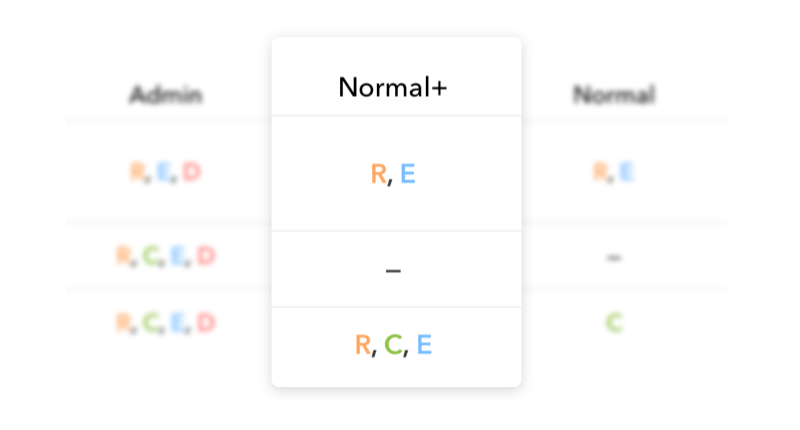
Quire organizations have five member roles. Admin, Normal+, and Limited+ can access every project in the organization; Normal and Guest cannot. Both Normal+ and Normal can add projects and become Admin of what they create, but Normal members can't open projects they aren't part of. It is Quire's way of scoping who sees what.
Clear roles are not only about security. Gallup found that only about half of employees strongly know what is expected of them at work, and defining who owns and sees what is a big part of closing that gap.
What are the member roles in a Quire organization?
We made a few enhancements in our organization member roles.
Both Normal+ and Normal members can add projects in an organization, and when they do, they become Admins of the projects. The only difference is that Normal members cannot access other projects that they are not members of.
Related: Master Organization: Save on Your Quire Subscription — see how grouping organizations under a master organization interacts with member roles and billing.
In summary, Admin, Normal+ and Limited+ members of an organization can access all projects in this organization. Normal and Guest members cannot.
For more details on roles & permissions, you can check out here.
Related: 5 Easy Steps to Quire's External Team — for outside collaborators like freelancers, Quire's External Team feature offers another way to grant limited project access beyond the Guest role.
Which role can see which projects?
Five roles, one question that matters most: who can open what. Here it is in one view.
| Role | Access to all org projects? | What's special |
|---|---|---|
| Admin | Yes | Full control of the organization |
| Normal+ | Yes | Can add projects and becomes their Admin |
| Limited+ | Yes | Access to all projects, with limits elsewhere |
| Normal | No | Can add projects (Admin of those), but can't open ones they're not in |
| Guest | No | Restricted to what they're explicitly given |
The practical upshot is control without micromanagement. Give a department head Normal+ and they can spin up and run projects on their own. Give an outside stakeholder Guest and they see only what you hand them. Normal sits in between: people who create and own their own work but shouldn't be browsing everyone else's. Picking the right role up front saves a lot of "who can see this?" questions later.
Why have this many roles at all? Because "everyone can see everything" stops working the moment an organization has more than one team. A marketing lead does not need to browse the engineering backlog, and a contractor certainly should not. Roles let you match visibility to responsibility without setting up a separate organization for every group.
The two middle roles do most of the day-to-day work: Normal+ for people you trust to run their own projects and see across the org, and Normal for people who should own their work but stay in their lane.
Guest and Limited+ handle the edges, the outsiders and the special cases. Set the role when you invite someone and the access question answers itself from then on.
One more practical note: adding a project always makes the creator its Admin, whatever their organization role. So a Normal member who starts a project runs that project fully, they just cannot wander into projects they were never added to.
That combination, full ownership of your own work and a closed door on everyone else's, is what keeps a growing organization from turning into a free-for-all where every new hire can read every plan on day one. It is a small setting with an outsized effect on how safe your workspace feels as the team scales.
If you are unsure which role fits, start people at Normal and promote them to Normal+ only when they genuinely need the wider view.

Frequently Asked Questions
Which organization member roles can access all projects in Quire?
Admin, Normal+, and Limited+ can access all projects in the organization. Normal and Guest members cannot.
What is the difference between Normal+ and Normal members in a Quire organization?
Both can add projects and become Admins of what they create, but Normal members can't access other projects they're not part of. It comes down to whether the member can reach projects they have not been added to. Quire uses the distinction so an organization can widen access without giving everyone administrator rights.
What happens when an organization member adds a project in Quire?
They automatically become an Admin of that project.