features · Nov 22, 2016
It is all about time in task management.

Last updated: September 21, 2026
Quire's time features work together to keep work on schedule: start and due dates with specific times, reminders ahead of deadlines, workspace and inbox notifications, task statuses, recurring tasks, and calendar sync. Set them once and the system nudges you and your team at the right moment. Free on every plan.
Time is a tricky thing. We all want to plan well, do the right tasks in the right amount of time, and finish without a scramble. And we all fail at it more often than we'd like to admit.
Part of the reason is wired in. According to Daniel Kahneman, who documented what he called the planning fallacy, people systematically underestimate how long their own tasks will take, even when they've done the same kind of work before. You can't fix optimism by trying harder to be realistic. But you can build a system that catches the slip before it becomes a missed deadline.
That's what Quire's time features are for: start and due dates, reminders, statuses, recurring tasks, and a calendar that ties it together. Here's how they play out in one real workflow.
How do due dates and start dates work in Quire?
It's about two months before Christmas. Kevin, a chief editor at a daily newspaper, wants a feature on how the holiday is celebrated in prisons. He assigns it to Megan with a due date of Dec 20, 3pm, leaving her room to write and himself room to review.
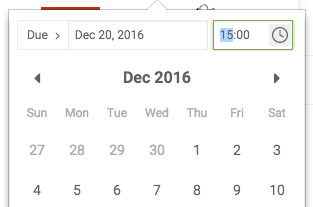
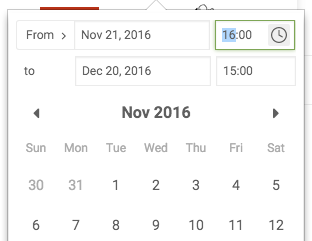
The detail that matters here is the time, not just the date. "Due Dec 20" is vague. "Due Dec 20, 3pm" is a real handoff. Megan looks at her load and sets a start date of Nov 21, 4pm, so the task has a beginning as well as an end.
How do reminders and notifications keep you on track?
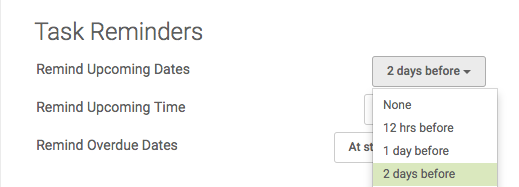
To avoid the classic "three hours left and I forgot" panic, Megan sets a reminder for two days before she's due to start.
Reminders have grown well past this since: they are now their own object, with multiple notifications, sharing, a repeat, and a standalone form for things that were never tasks. See task reminders in Quire.
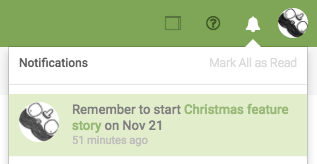
On Nov 19, the reminder fires. Megan gets notified in both her Quire workspace and her inbox, nudging her to start on the Christmas story.
This is where the planning fallacy meets its match. Megan doesn't have to remember the deadline. The system does, and it speaks up early enough to matter.
How do status, recurring tasks, and the calendar fit in?
With pen and paper ready, Megan heads out to interview inmates behind bars. On the way, she changes the task status to In Progress from her iPhone.
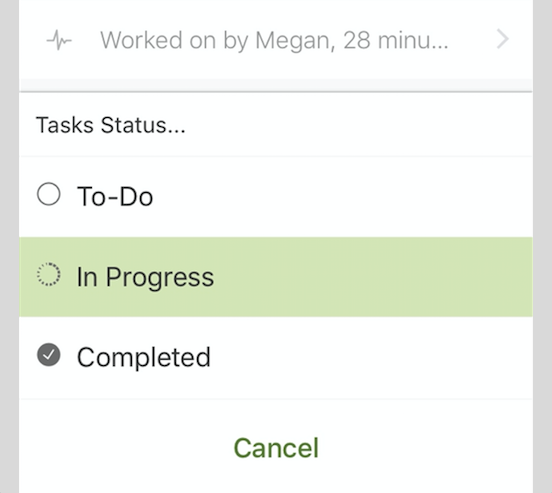
Kevin sees the progress, and so do the graphic designer and typesetter who follow the task. One status change keeps the whole team in the loop, no group message required.
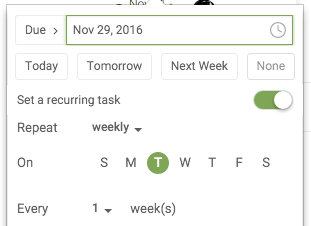
Then there's the work that repeats. Every Tuesday, Megan and Kevin have a team meeting. Instead of adding a task each week, she adds one and sets it to repeat.
Back at the office, Megan imports the tasks assigned to her into her calendar to see the week and month ahead. For tasks with both a start and due time, a Gantt-style view shows up in the calendar too.
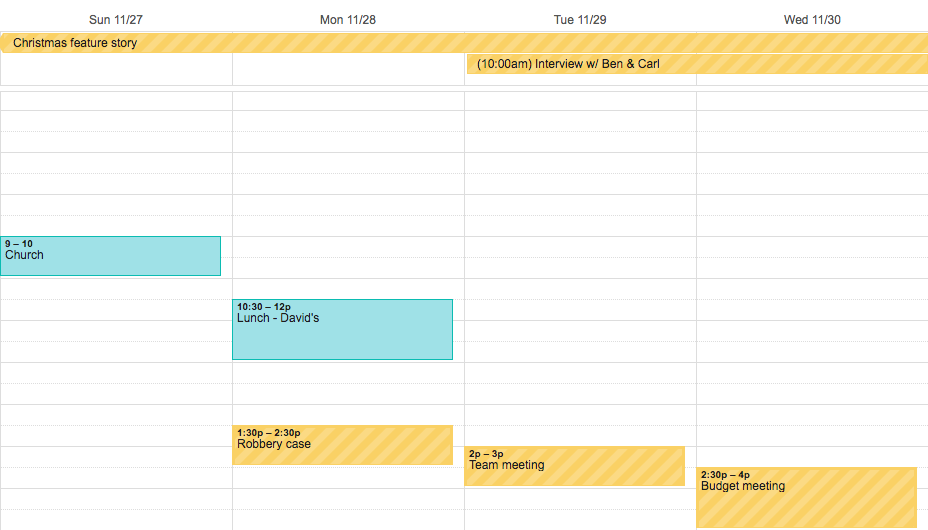
You can sync your tasks to Google Calendar, Apple Calendar (iCal), Outlook Calendar, and more.
Ready to get the most out of your time?
Pick one real task this week and give it the full treatment: a start time, a due time, and a reminder a day or two early. Often it's not enough to know what day something is due. Knowing the hour is what lets reminders and notifications do their work. We hope these features help you get the most out of your time, instead of getting run over by it.

Frequently Asked Questions
How do due dates and start dates work in Quire?
Every task can have a start date and a due date, each with a specific time, so you can schedule real handoffs down to the hour.
How do reminders and notifications work?
Set a reminder ahead of a deadline and Quire notifies you in your workspace and inbox. Status changes also notify a task's followers.
Can you create recurring tasks?
Yes. Add a task once and set it to repeat, so routine work like a weekly meeting never has to be recreated.
Can you sync Quire to your calendar?
Yes, to Google Calendar, Apple Calendar, Outlook, and others. Tasks with start and due times also show on a Gantt view in-app.
Are these features free?
Yes. Dates, times, reminders, notifications, statuses, and recurring tasks are part of core Quire on every plan including free.