features · Aug 15, 2022
Introducing Smart Calendar: A New Way to View Your 365 Days
Last updated: September 30, 2026
Quire Calendar lays out your tasks across five views (Day, Week, Month, Schedule, and Year), so you can plan tomorrow or the whole quarter from the same place. The nested task list stays alongside (yes, the same trick Quire pulls in Timeline view). Available on Professional, Premium, and Enterprise plans, with Schedule view exclusive to Premium and above.
- What can I do with Quire Calendar?
- The 5 Quire Calendar views, at a glance
- How does the Head of Quire's PR team use Schedule view?
- How does the Product team use Week view to plan ahead?
- Why does Quire's Board of Directors rely on Year view?
- What are the most common mistakes when using a project calendar?
- When should you pair Calendar view with another Quire view?
- Frequently Asked Questions
- Are you ready to become a more organized team?
Starting today, you will see your projects in a brand new view: A Smart Calendar View. Well, it’s not like we invented the achievement that belongs to the ancient Babylonians, but Quire Calendar does have some mind-blowing features that the Babylonians haven’t thought of (can’t blame them, project management software ain’t that ancient! 😁 )
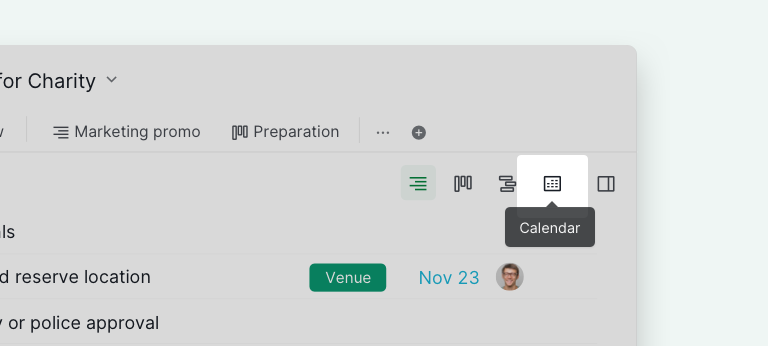
If you’re an almighty Quirean from the beginning, you know where to find the view. And if you’re a newbie here, please click on the Calendar icon at the upper right corner of the main panel in any List or Sublist view that you’re in. Voilà, your tasks are now laid out in a calendar view.
My Tasks and Smart Folder also support Calendar View.
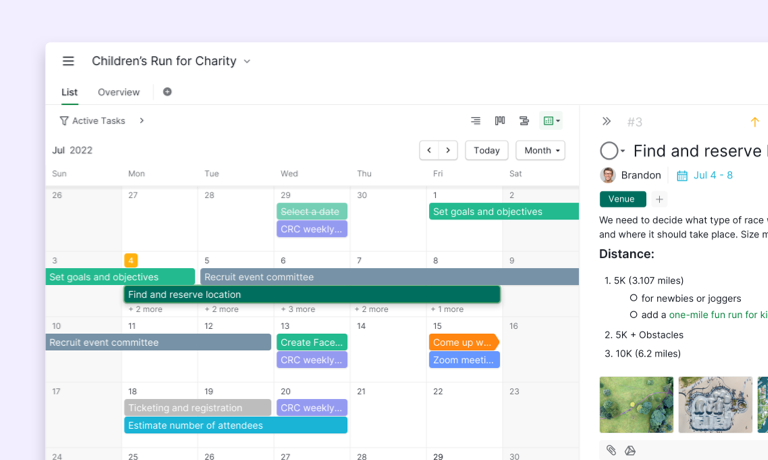
What can I do with Quire Calendar?
Are you familiar with any other calendar apps out there? Quire Calendar has all of the features needed for you to schedule your tasks forward and view your projects with a clear timestamp.
Calendar View is exclusive for Professional, Premium and Enterprise subscription plans. More information can be found on our Pricing page.
But exactly, what can you do with Quire Calendar?
- Schedule your projects ahead and plan out by each phase.
- Quickly create events and share them across your organization.
- Keep your task list attached to your calendar.
- Focus on what matters with a one-and-only schedule view.
- Collaborate with your team effortlessly with a calendar that shows all the details for your projects.
Related: How Do You Drag and Drop Tasks to Your Calendar in Quire? (2026 Guide) — a closer look at scheduling tasks directly on the calendar grid.
For a detailed guide on how to Calendar your way, please visit our Guide for Calendar View.
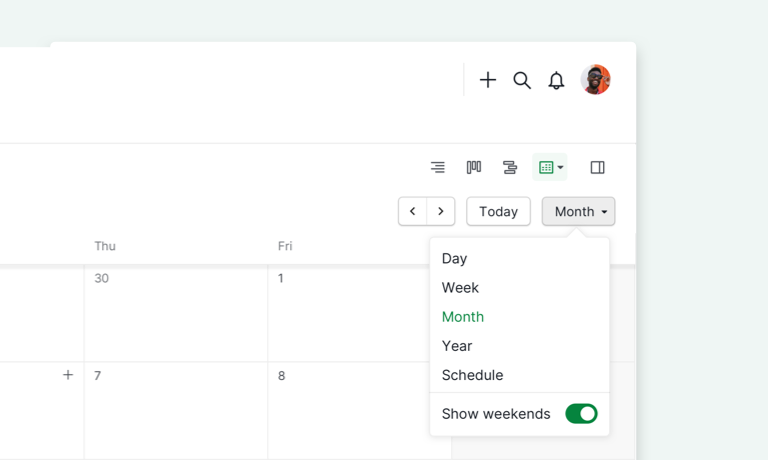
Of course, like other calendar apps out there, you are not limited to only one calendar view. We have not one, but five different views for you to visualize your projects (the classic buy one get five deal, we know!) 🤘
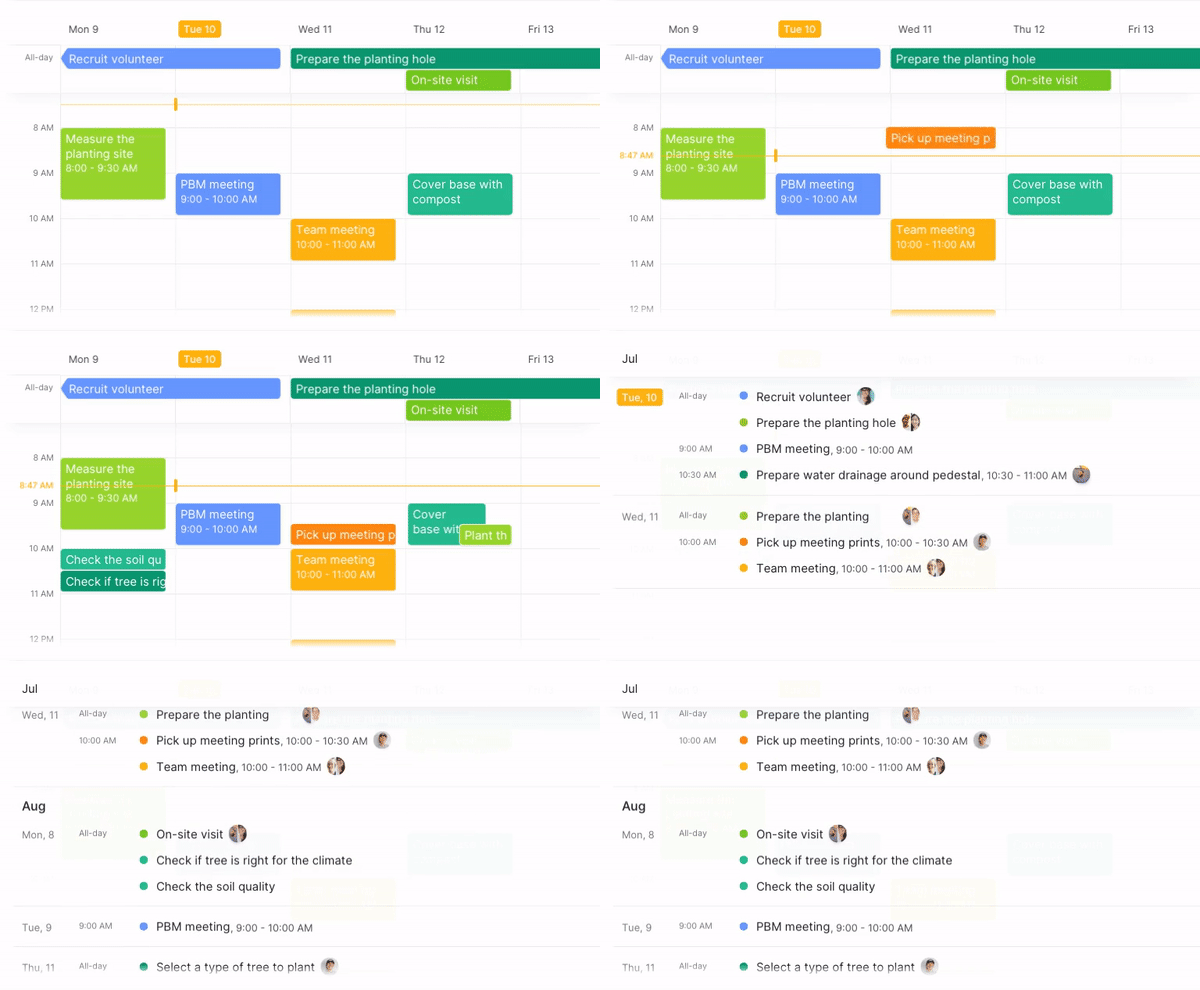
Curious about how we use the Calendar here at Quire? You lucky thing, here are some examples from our teams to let you know how to best utilize Quire Calendar!
The 5 Quire Calendar views, at a glance
Quire Calendar isn't one view, it's five, and each one was built for a different way of thinking about time. The trick is that you don't pick one and stick with it (at least, not the way you might pick a primary task view).
The five views are scaffolding for different planning horizons, from "what does the next hour look like" (Day) to "what does Q3 actually contain" (Year). Most teams end up using two or three regularly. The rest stay quietly available for the moments they're useful. Here's the map, and which Quire team actually uses each.
| View | Best for | Who uses it at Quire | Available on |
|---|---|---|---|
| Month | Big-picture planning. The whole month on one screen. | Most of us, by default | Professional, Premium, Enterprise |
| Week | The next 7 days. Catching overload before Friday arrives. | Product team's Monday planning sit-down | Professional, Premium, Enterprise |
| Day | Today's focus. Tasks lined up hour by hour. | When the calendar doubles as the to-do list | Professional, Premium, Enterprise |
| Schedule | A list of tasks with dates. No grid, no visual noise. | PR head, who hates calendar grids | Premium, Enterprise |
| Year | 365 days at a glance. Patterns, peak seasons, planning cycles. | Board of Directors, twice a year | Professional, Premium, Enterprise |
You don't pick one view and stick with it. Most people switch between Month and Week through the day, then pull up Year when they're planning the next quarter. Schedule and Day are more specialized, and you'll know when you need them. (Hint: when the Month view starts feeling like a wall of small text, that's Schedule's moment.)
How does the Head of Quire's PR team use Schedule view?
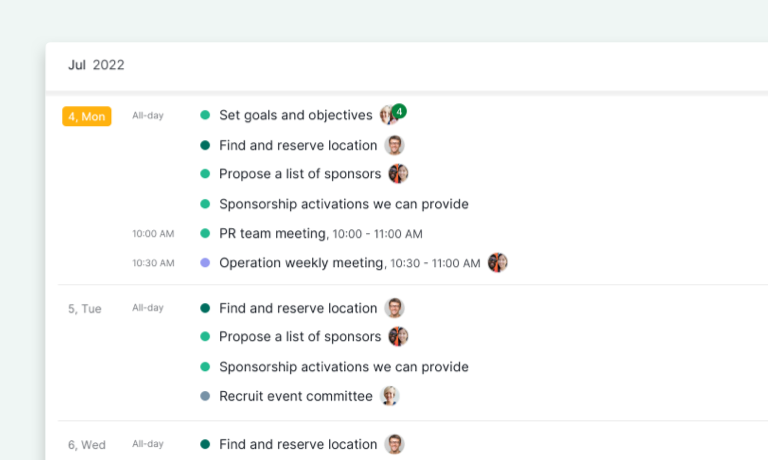
The schedule view saves us from the headache of seeing too many irrelevant things when we need to focus. As busy as the Head of Quire PR Team, he needs a view to list out the tasks with dates only. He gets a clear picture of the project timeline ahead, and that’s all he wants.
It’s really helpful to view the events that his team already booked or scheduled side by side. Are there any conflicts in the schedule? Does he need to compare the tasks’ due dates? Schedule view is here to help.
Schedule View is only available in Premium and Enterprise plans. More information can be found on our Pricing page.
How does the Product team use Week view to plan ahead?
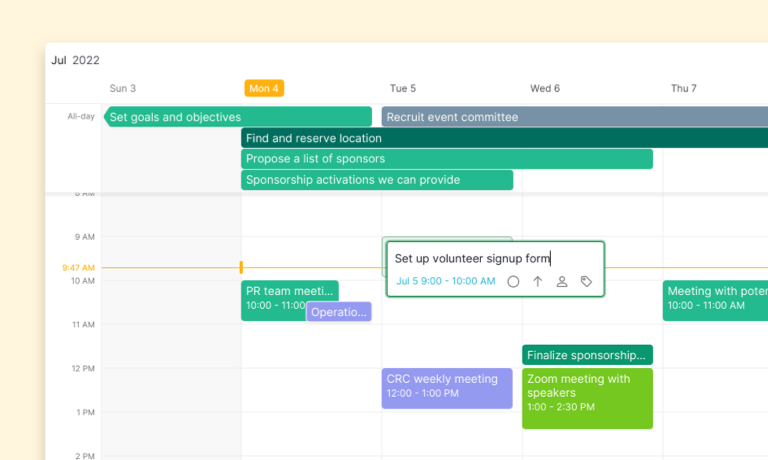
Quire is a fast-moving software company, which also means we regularly release updates for Quire, both mobile and website versions. We need a calendar view that helps us schedule all of the events and tasks side by side.
The week view offers Quire Product Team an overview of how our weeks look. We can see exactly how many tasks are scheduled and we can plan for the next seven days. A helpful tip: we always sit down and discuss every Monday so our weeks will be planned more properly!
Why does Quire's Board of Directors rely on Year view?
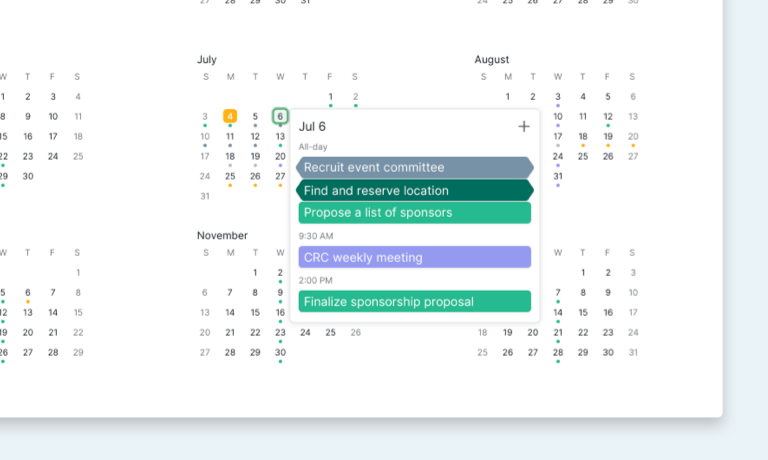
If you are in charge of a business up and running, you will need to plan way ahead to see if there’s enough time for your teams to make great things happen!
Quire BOD uses the year view to see the entire year at a glance. Dates with tasks will be highlighted with a small dot so you’ll know there’s something exciting gonna happen that day!
Being able to view your plan within the scope of an entire year, the board can make better long-term decisions for the team. They can even spot the patterns or the peak seasons during the whole year.
A small tip here: Quire BOD uses Quire Calendar on Smart Folder as well to have the bird eye’s view of every project that is going on in the company!
What are the most common mistakes when using a project calendar?
Three patterns trip up teams who try to live in a project calendar. None are obvious until you've already made them.
1. Putting every task on the calendar. Five-minute tasks don't belong on a calendar grid. They belong on a checklist. If your calendar shows "reply to Sarah's email" right next to "Q3 product launch," the calendar stops being useful, because it's no longer the schedule of your project, it's a wall of indistinguishable boxes. Save the calendar for tasks that genuinely take a meaningful slice of your day.
2. Treating the calendar as a status dashboard. The calendar shows when work is happening, not whether it's done. Teams that try to track status on the calendar end up running two systems: the calendar that's supposed to be live, and the actual task list with the real status.
The calendar drifts, nobody trusts it, and the team quietly goes back to the task list. Keep status on the task and let the calendar handle the dates.
3. Sharing the calendar with too many people. Calendar over-sharing is the cousin of meeting over-invitation. If your sales team's calendar is visible to engineering, engineering will eventually book over it, or worse, schedule around it without knowing what's actually happening. Share calendars by team unit and use Quire's view-level permissions to scope what each role sees.
4. Not picking a default view and sticking with it. Switching between Month, Week, and Schedule every five minutes feels productive, but it's actually a tax on attention.
Pick the view that matches how your team thinks about time (Month for marketing, Week for product, Year for leadership), set it as the default for the project, and switch only when you have a specific reason. Most teams over-switch in the first month and under-switch by month six.
Avoid those four and your calendar will still be useful at month six. Most teams' calendars aren't.
The deeper version of mistake one is a date field doing three different jobs at once. See what belongs on a project calendar and what does not.
When should you pair Calendar view with another Quire view?
Calendar is built for scheduled work, and Quire's other views pick up the rest of the project:
- An undated backlog lives in the Tree view. If you have 200 tasks without dates, they sit in the Tree view (the default) until they get a date. Tasks earn their way onto the Calendar when they get one.
- Dependencies and parallel tracks live on the Timeline. Calendar answers "when does this happen?". For "what blocks what?", the Timeline view draws the links.
If your project has real dates and your team treats them as commitments, Calendar is the view to live in, and the rest of the project is one click away in another Quire view.
A calendar answers what lands on a given day and hides the sequence behind it. For the trade each view makes, see gantt chart vs kanban vs calendar.
Frequently Asked Questions
What is Quire Calendar?
The native calendar view inside Quire. It lays out your project tasks across five different views (Day, Week, Month, Schedule, Year), so you can plan tomorrow or the whole quarter from the same place.
How many Calendar views does Quire support?
Five: Day, Week, Month, Schedule, and Year. You switch between them with one click from the calendar toolbar.
Which Quire plans include Calendar view?
Calendar view comes with Professional, Premium, and Enterprise plans, and Schedule view with Premium and Enterprise.
Can you share Quire Calendar with people outside your team?
Yes, through Quire's read-only share links, scoped by the same permission model that controls task visibility. Clients, reviewers, and executives get a live read on the schedule without taking up a paid seat.
How does Quire Calendar differ from Google Calendar?
Google Calendar is built around events at fixed times. Quire Calendar is built around project tasks with start and due dates. They're not interchangeable, but they coexist well if you sync.
Are you ready to become a more organized team?
It’s no secret that sticking to a schedule is important. You work as a team, you need to know what’s going on and what the future looks like for your projects.
No matter if you’re a CEO, a Marketing Manager, or an entry-level specialist, you need a clear schedule that helps you better plan your work. And Quire is here to help.
Are you ready to become more organized? We know you are. Go wild, and we hope your next 365 days will be awesome! 🤘
P.S.: There will be a lot of potential aspects of a Calendar that we haven’t explored yet. Leave your comments here below or tweet us at @quire_io to let us know what you think of our Calendar and how we should make it even better! 🚀