features · Apr 14, 2023
Introducing Sections: Divide and Conquer Your Task List
Last updated: May 29, 2026
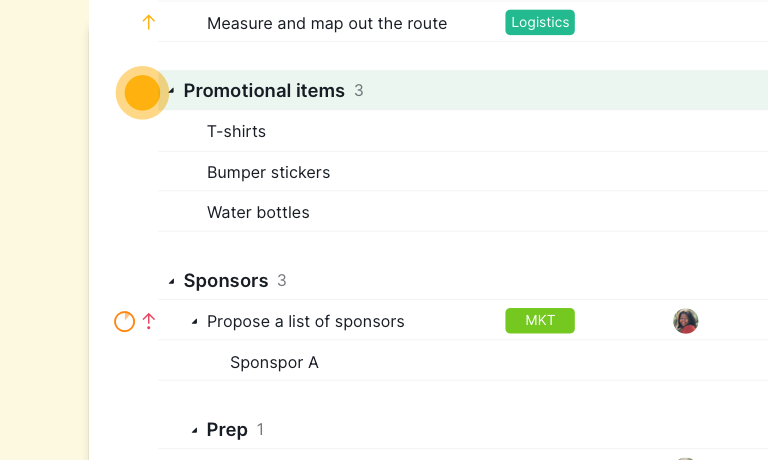
Sections in Quire group tasks inside a project, with multi-level nesting (the unusual part for a PM tool). Different from Folders (which group projects) and Sublists (which filter views). Use them to break a long task list into scannable chunks by stage, topic, or client. Available on every plan including free.
Are you tired of having too much on your plate and your plain old task list doesn't help? We all need our task list to be organized so that we can be more organized ourselves. Today we're excited to introduce Sections, the easiest way to group your task list and get a more structured view of your project.
The cognitive case for grouping is well established. George Miller's 1956 paper "The Magical Number Seven, Plus or Minus Two" found that working memory comfortably holds about seven discrete items at a time, which is exactly why a 50-task list feels overwhelming and a 50-task list grouped into five sections of ten feels manageable. The list didn't shrink; the chunks did the work. Sections are Quire's way of doing the chunking inside one project.
What are Quire Sections?
Sections in Quire are a way of organizing and grouping tasks within a project. They are similar to folders or categories but have more structure and flexibility.
Each section has its own set of tasks, which can be managed independently of other sections. This makes tracking progress, assigning tasks to team members, and managing deadlines easier. Also, Quire is one of the very few, if not saying the first tool that lets you have a hierarchical structure for sections (multiple-level sections).
You can group your tasks by Section in the Kanban Board view for better organization.
How should you use Sections?
Of course, the main use of sections is dividing your tasks into different categories. Instead of a laundry list, you should have a more well-structured list that actually helps you get things done.
Here are some samples of how we use Sections at Quire:
- Group the project based on the working stages.
- Use Sections as Headers when brainstorming ideas for content writing.
- Group the tasks that belong to a common goal.
- Name the Section as a Client’s Name or Company and group all the relevant tasks together under that section.
Have you thought of any other uses for sections? Let us know in the comment section!
For a detailed guide on how to best utilize your sections, please visit our Guide for Section.
How to best organize with Sections, Folders, and Sublist?
When working on a mammoth project, getting lost in the huge amount of tasks and information is so easy. Putting everything into one long list might seem the best thing to do at the time, but don’t.
At Quire, we always emphasize the power of breaking down a big goal into small, manageable tasks and subtasks. A couple of years back, we introduced Quire Sublist - how you can create a sublist within a project. By having a more personalized list that mirrors the main list helps you a lot with focusing on what needs to be done and what is the most relevant to your scope of work as well.
A while back, we added Folder for you to better organize the projects and easy navigation. You can create different folders within one organization and start adding projects to those folders.
Now with the latest update, Section is added to your project. You can think of it this way: A project is like a book, a sublist is a chapter, a folder is your book collection, and a section is like a paragraph.
Next time when you’re struggling with a project, try to break it down into smaller, more manageable sections, folders, and sublists. You can now focus on the steps in front of you and steadily make progress toward your goal, instead of feeling overwhelmed by the big picture. You might be surprised at how much easier it is to tackle your to-do list when it’s organized in a way that makes sense to you.
No matter how you’re working on your tasks, you’re bound to face a more complex project than you thought. But no worries, take our tips and best utilize the features that we curated just for you so that you will stay more productive and actually enjoy the process of walking towards your final goal.
That's all for today! Is there anything that you'd like us to know? Let us know in the comment section and we're all ears!
When are Sections the wrong tool for the job?
Three situations where Sections add overhead rather than clarity.
- Your project has fewer than 10 tasks. A short task list doesn't need grouping. The cognitive load of scanning 10 items unsorted is lower than the load of deciding which section they belong to.
- Tasks routinely move between groups. If you'd be re-categorizing tasks every day, Sections become a maintenance burden. Use Tags or a custom field instead, since those move with the task naturally.
- Different team members need different groupings. Sections are project-wide and visible to everyone. If your designer wants to see tasks by sprint while the PM wants to see them by client, that's a Sublist problem, not a Sections problem.
If none of those apply and your project has more than 15 to 20 tasks, Sections will make the list noticeably easier to work with.
Ready to break up your task wall?
Open a Quire project that's grown long, pick three natural groupings (stages, topics, clients), and convert the relevant tasks into a section each. The list will feel different within an afternoon. Sections are free on every Quire plan. The pricing page covers what else each tier includes.

Frequently Asked Questions
What are Sections in Quire?
Sections group tasks within a single project, similar to folders but with more structure. Quire supports multi-level sections, so a section can contain sub-sections, keeping long task lists scannable.
What is the difference between Sections, Folders, and Sublists in Quire?
Sections divide tasks inside one project. Folders organize multiple projects in an organization. Sublists are personalized filtered views for one user. Think of a project as a book, a folder as the bookshelf, and a section as a paragraph.
How should you use Sections in Quire?
Common patterns are grouping by stage, by topic, by client name, or as content headers when drafting a document. Pick whatever grouping matches how your team actually thinks about the work.
Can Sections be nested?
Yes, Quire supports multi-level sections, which is unusual among PM tools. A top-level section like Marketing can contain sub-sections like Content, Design, and Paid Media.
Are Sections available on the free Quire plan?
Yes. Sections are available on every Quire plan, including free, with no upgrade required.